The Wait Is Part of the Gift: The Psychology of Anticipation in Scheduled Delivery
Instant delivery treats waiting as friction to eliminate. Savoring research, anticipation neuroscience, and the psychology of temporal landmarks suggest the opposite: choosing when a message arrives can be as emotionally meaningful as choosing what it says.
The Wait Is Part of the Gift: The Psychology of Anticipation in Scheduled Delivery
Most digital tools are built to collapse the distance between wanting and having. Type a message, hit send, it arrives in seconds — and the assumption baked into that speed is that faster is always better, that any gap between intention and delivery is friction to be engineered away. That assumption holds up fine for a delivery notification or a password reset. It holds up much less well for an emotional message, because a growing body of research on savoring, anticipation, and reward suggests that the gap itself — the waiting — isn't dead time. For a certain kind of message, it may be part of what makes the eventual arrival feel like something at all.
What does it mean to "savor" a message before it even arrives?
Positive psychologist Fred Bryant's decades of research on savoring — most fully laid out in Savoring: A New Model of Positive Experience — identifies anticipation as one of three distinct temporal forms the deliberate enjoyment of a positive experience can take, alongside savoring the moment itself and savoring it afterward in memory. Anticipatory savoring isn't passive waiting; it's active engagement with a future positive event, and Bryant's research links it to genuinely elevated positive affect in the present, before anything has actually happened. The counterpart finding is just as interesting: some people habitually dampen their own anticipation, deliberately downplaying an upcoming good thing to protect themselves against possible disappointment — a coping strategy that, ironically, forfeits real, available positive emotion in the name of caution.
Applied to a scheduled message, this reframes what "waiting" actually is. A card set to arrive on a specific future morning isn't a message sitting in a queue. If the recipient knows it's coming, it's an open invitation to savor — a small, recurring point of anticipation between now and then.
Nugget: Anticipation isn't the empty stretch before a good feeling starts. In savoring research, it's classified as one of the ways positive feeling happens in the first place.
Why does looking forward to something feel almost as good as getting it?
The neuroscience underneath this is unusually direct. Reward-anticipation studies consistently find that the mesolimbic dopamine system — the same circuitry implicated in reward and motivation broadly — responds most strongly not at the moment a reward is delivered, but at the moment a cue predicts it's coming. A 2023 study in the Journal of Neuroscience found that anticipation of an upcoming reward-driven action produced a sustained dopamine release in the nucleus accumbens throughout the waiting period, not just a spike at delivery — what researchers describe as a dopamine "ramp." Human neuroimaging work on reward anticipation finds the same basic pattern across reward types, whether the eventual payoff is money, a favorite food, or a smiling face.
None of this means the arrival doesn't matter — it clearly does. But it does mean the brain doesn't treat "before" as a null period to get through on the way to the feeling. Anticipation is doing some of the emotional work all on its own.

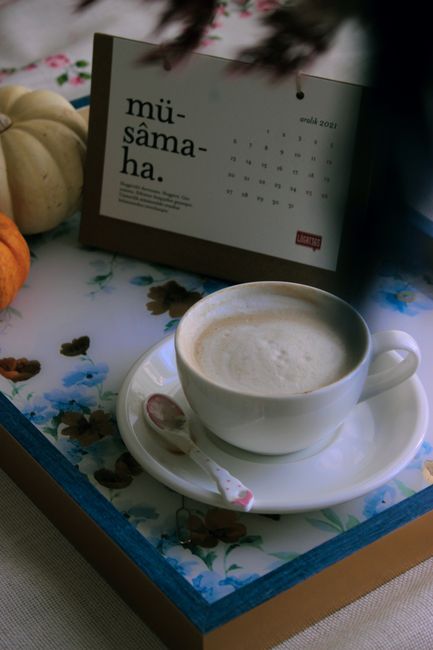
The moment of writing and the moment of arrival are two separate emotional events — not one event split by a delay. Photo by www.kaboompics.com via Pexels.
Does waiting actually make people happier than receiving?
There's direct evidence that it can. In "Waiting for Merlot," Amit Kumar, Matthew Killingsworth, and Thomas Gilovich found across several studies — questionnaires about real planned purchases, a large-scale experience-sampling study, and an archival analysis of people's own accounts of waiting — that anticipating an experience is reliably more pleasant than anticipating a material good. People thinking ahead to a concert, a trip, or a meal out reported more excitement and positive feeling in that waiting period than people thinking ahead to a purchase like clothing or a gadget. The core mechanism the researchers point to is that experiences are harder to "auto-pilot" mentally — they invite more active, engaged imagining of the specific thing to come, which is exactly the raw material anticipatory savoring runs on.
A scheduled personal message sits closer to the experiential end of that spectrum than the material one. It isn't a good arriving on a date; it's a moment arriving on a date — which, per this research, is precisely the kind of anticipation that tends to feel best to sit inside.
| Form of savoring (Bryant) | What it feels like | Where scheduled delivery fits |
|---|---|---|
| Anticipatory | Looking forward, actively imagining what's coming | The days between scheduling and delivery |
| Momentary | Fully absorbing a positive experience as it happens | The instant the message is opened |
| Reminiscent | Looking back and re-experiencing a positive moment | Rereading the message weeks or years later |
Why do some future dates carry more emotional weight than others?
Not every future date is created equal, which matters for when a message is scheduled to land, not just that it's scheduled at all. Research by Hengchen Dai, Katherine Milkman, and Jason Riis on the "fresh start effect" found that temporal landmarks — New Year's Day, a birthday, the start of a new month or semester — produce measurable spikes in aspirational behavior, from gym visits to goal-related searches, because they psychologically separate the past from a fresh mental accounting period. Critically, their lab experiments found the effect scales with how personally meaningful a landmark feels, not just how objectively significant it is on a calendar — a landmark someone assigns meaning to themselves works as well as, or better than, a culturally standard one.
The same logic extends naturally to a scheduled message. A card that arrives on an arbitrary Tuesday is just well-timed. A card that arrives on a first day back from a hard stretch, an anniversary only the sender and recipient know the significance of, or the exact morning of a birthday carries the psychological weight of a landmark — the date itself is already doing part of the emotional work before the recipient even opens what's inside.
Nugget: The date a message arrives isn't neutral packaging around the content. When it lines up with a date that already means something, the timing itself becomes part of the message.

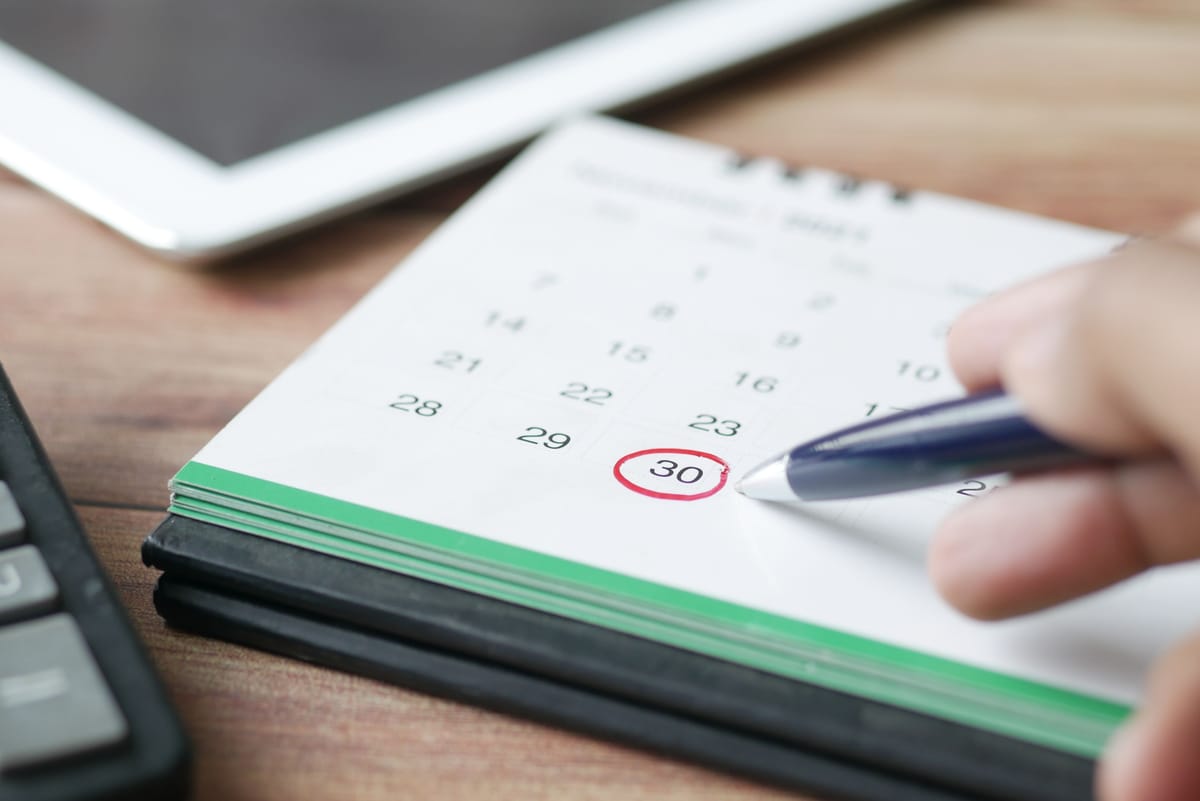
A well-chosen date does some of the emotional work before a single word is read. Photo by Murilo Folgosi via Pexels.
When does scheduling ahead work against the feeling instead of for it?
This isn't a case for scheduling everything as far in advance as possible. Bryant's dampening research is a useful check here: for some people and some relationships, an anticipated message that's known about too far ahead, or announced too explicitly, can start to feel less like a gift and more like an obligation being tracked toward — the opposite of spontaneous care. There's also a real difference between a recipient anticipating a message because they know one is coming, and a message simply arriving on a delayed timer with no anticipation attached at all; the psychological upside described here belongs to the former, not automatically to the latter. Scheduling works because the wait is felt as meaningful, not merely because a queue exists. A message set to land on a landmark date, sent by someone who chose that date on purpose, is a very different emotional object than a reminder that happened to fire.
FAQ
Is scheduling a card's delivery actually better than sending it right away? Not universally — it depends on what's being optimized for. Instant delivery suits urgency or a spontaneous impulse. Scheduled delivery suits a message tied to a specific future moment, where the research above suggests the anticipation itself can add emotional value rather than just delaying it.
What is anticipatory savoring? It's one of three temporal forms of savoring identified by positive psychologist Fred Bryant — actively enjoying a positive experience before it happens by imagining and looking forward to it, distinct from savoring something in the moment or in memory afterward.
Does the brain actually respond to anticipation, not just to the reward itself? Yes. Reward-anticipation neuroscience finds that dopamine activity in the brain's mesolimbic system often peaks at the cue that predicts a reward is coming, and can sustain throughout a waiting period, rather than only spiking when the reward is delivered.
Does timing a message to a specific date matter, or is any future date fine? Research on temporal landmarks suggests personally meaningful dates carry more psychological weight than arbitrary ones — a date that already means something to the sender or recipient does part of the emotional work before the message is even opened.
The open question
None of this settles into a tidy rule for when to schedule a message and when to send it now — and it probably shouldn't. Savoring research itself shows people relate to anticipation differently: some lean into it, some protect against it. The more useful shift may just be noticing that the choice is being made at all. Waiting was never empty time by default. It's only empty if nothing is scheduled to end it.
Sources: Bryant — Current Progress and Future Directions for Theory and Research on Savoring, Frontiers in Psychology · Anticipation of Appetitive Operant Action Induces Sustained Dopamine Release in the Nucleus Accumbens, Journal of Neuroscience · Kumar, Killingsworth & Gilovich — Waiting for Merlot, Psychological Science · Dai, Milkman & Riis — The Fresh Start Effect, Management Science