When Vastness Makes Room for Someone Else: The Psychology of Awe in Digital Cards
Awe isn't just "wow, pretty mountains." Research shows vast imagery can quiet the self and open the door to generosity and connection — which is why the right landscape or night sky can carry a message further than a busy template.

When Vastness Makes Room for Someone Else: The Psychology of Awe in Digital Cards
You're scrolling for a card and stop on a ridge at sunrise — gold light, endless layers of mountain, a sky that doesn't care how your inbox looks. Something in your chest loosens. You weren't looking for "landscape." You were looking for a feeling big enough to hold what you want to say.
That feeling has a name in psychology: awe. And it turns out awe doesn't just decorate a message. It can quietly change how ready someone is to care.
Vastness first — then the words. Photo by Quang Nguyen Vinh via Pexels.
Nugget: Awe makes the self a little smaller — and that smallness is often what makes room for someone else.
What is awe, in plain language?
Psychologists describe awe as the emotion that shows up when something feels vast — bigger than your usual frame — and a little hard to fit into your existing mental boxes (Keltner & Haidt's foundational framing, developed across two decades of follow-up work). Tall trees. A night sky. A piece of art that stops you. A collective moment where you feel part of something larger.
It isn't the same as happiness. Happiness says this is good. Awe says this is bigger than me — and somehow that can feel like relief.
We've written about why images move us faster than words and about color helping regulate mood. Awe is a specific gear in that machine: not warmth, not nostalgia — scale.
Why does awe make people more generous?
Across multiple studies, Piff, Dietze, Feinberg, Stancato & Keltner (Journal of Personality and Social Psychology) found that awe — even brief inductions like looking up at towering trees or watching vast nature scenes — increased ethical decision-making, generosity, and helping behavior compared with other positive states. A key mechanism: the small self. When awe lands, self-focused concerns shrink a little. Attention frees up for other people.
Later reviews keep finding the same pattern: awe acts as a bridge from "me" to "we," strengthening prosocial tendencies and a sense of connection to wider collectives (Current Opinion in Psychology, 2025 overview; health-pathway review). You don't need a solar eclipse. A short encounter with perceptual vastness can be enough.
For senders, that's practical. A card built around awe isn't only saying look how pretty. It's creating a psychological weather where care has more oxygen.
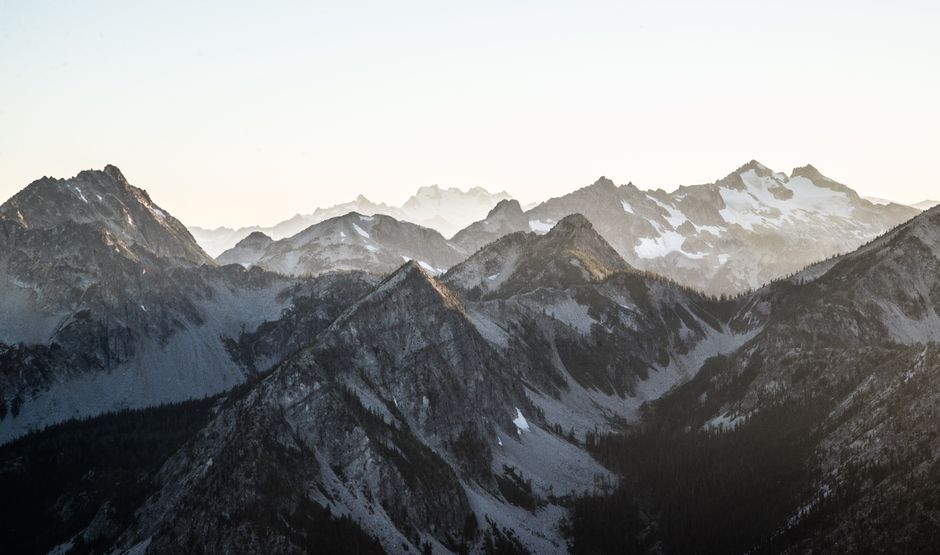
Scale that quiets the noise — then a human line can land. Photo by Roman Pohorecki via Pexels.
How do you send awe without losing the person?
Here's the trap: vast imagery can feel impersonal if you stop at the vista. A stranger could send the same ridge. Awe opens the door; specificity walks through it.
| Move | What it does | Watch-out |
|---|---|---|
| Vast image alone | Primes small-self / openness | Can feel generic ("nice wallpaper") |
| Vast image + mutual place | "We stood here" / "this is your trail" | Only works if the place is shared |
| Vast image + present tie-in | "Thinking of you under a bigger sky this week" | Keep the line short — don't narrate the mountain |
| Busy collage trying to be epic | Visual noise | Blocks awe; no room for the small self or the message |
Pick scale that matches the feeling. Night sky for quiet solidarity. Open water for release. Mountains for steadiness and perspective. Browse by landscape, space, and mood rather than hunting a holiday aisle that never stocked "awe."
Keep the words small on purpose. Awe images need a place for text to sit — usually sky, mist, or soft foreground. One honest sentence beats a paragraph explaining the view.
Invite them into the vastness. Wish you could see this light or This is how big my hope for you feels turns the sublime into a shared room, not a postcard flex.

Wonder works best when it has a human address on it. Photo by Nguyễn Thanh Ngọc via Pexels.
Nugget: The mountain isn't the message. The mountain is the pause that lets the message matter.
When awe isn't the right register
Threat-based awe — storms, danger, overwhelming scale that feels unsafe — can tighten people instead of opening them. Soft vastness (dawn, quiet stars, gentle mist) is usually kinder for a one-to-one card.
Also: if someone needs concrete help, a sublime landscape without a clear offer can feel like spiritual bypassing. Pair wonder with usefulness when the moment is hard — I'm here; tell me what would help under a calm sky, not instead of it.
And don't confuse awe with nostalgia. Nostalgia reconnects through shared past. Awe reconnects through shared scale — we're both small under something larger. Different bridges.
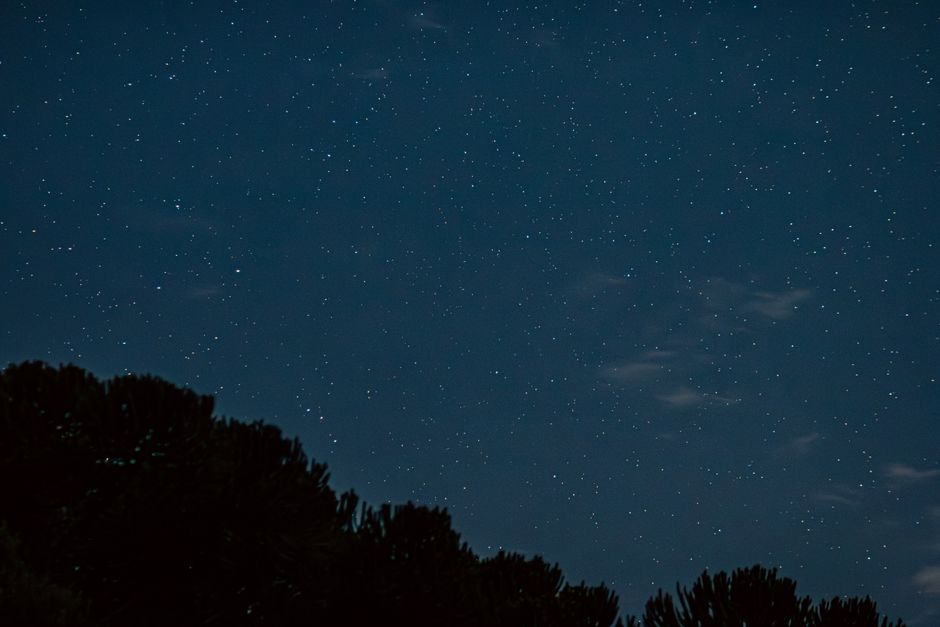
Same sky, different windows — awe is the feeling that you're looking up together. Photo by Lucas Pezeta via Pexels.
Frequently asked questions
Is awe just for nature lovers? No — art, music, architecture, and moral beauty can elicit it too. Nature is simply a reliable, research-tested path.
Won't a huge landscape make my personal note feel tiny? That's the design challenge, not a bug. Place a short line in open negative space so smallness feels intentional — "held by the view," not lost in it.
Can a phone screen really create awe? Brief nature imagery has been enough to shift prosocial behavior in lab and field studies (Piff et al.). It won't replace standing under real trees — but it can still change the emotional weather of a message.
How is this different from "pretty scenery" cards? Pretty is decorative. Awe is scale that rearranges attention. Choose images with depth, distance, and quiet — then address one specific person inside that quiet.
The last word
Some messages need a cozy corner. Some need a bigger sky.
When you want someone to feel less alone in their worry, or more generous toward themselves, or simply reminded that their week sits inside a wider world — reach for vastness on purpose. Then do the human part: one line that could only be for them.
Start at TheBlueBrook when you already know the mood, or browse the full library when you want landscapes, night skies, and quiet horizons laid out side by side. Find the view that stops your scroll. Leave room for the person who matters under it.