Why Video and Animated Cards Are the Fastest-Growing Corner of Digital Greetings
Static e-cards aren't disappearing, but the growth curve in digital greetings is bending toward motion — here's what the market data says and why it tracks with how people actually feel about being seen.


Why Video and Animated Cards Are the Fastest-Growing Corner of Digital Greetings
A static e-card is still a message. But the numbers suggest fewer people want to stop there.
How big is the shift, actually?
The global e-card market is valued at roughly $4.97 billion in 2026 and is projected to reach $10.03 billion by 2035 — a 7.44% compound annual growth rate (Business Research Insights). That's healthy growth for the category overall. But the interesting number is inside that total: animated e-cards have seen a 42% rise in adoption, and 47% of younger senders say they now prefer dynamic, emotionally expressive video formats over a traditional static card (ProHolidayCheers). Roughly 55% of digital card users worldwide have already adopted personalized, animated, or mobile-native formats, and 72% of adults under 30 say they prefer digital greetings generally.
Put simply: the category is growing, and motion is growing faster than the category.
Nugget: A still image asks someone to imagine a feeling. A few seconds of motion — a wave, a wobble of text, a laugh — hands them the feeling directly. That's a smaller ask of the recipient's imagination, which is probably why it converts to "this felt personal" so much faster.
Why would motion outgrow stillness?
It's tempting to read this as a novelty effect — video is newer, so of course it's growing off a smaller base. That's part of it. But it doesn't explain why younger senders specifically are the ones driving the preference shift. A more likely explanation: video and animation carry information a static image can't — timing, tone of voice implied by motion, the small imperfections that make something feel handmade rather than templated. For a sender trying to prove a message is genuinely theirs and not a generic pick, motion is evidence. A still card can be curated in five seconds; a video card usually can't be faked in five seconds.
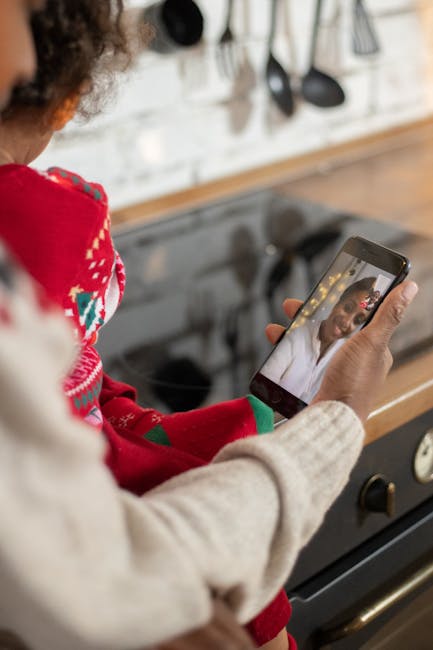
A screen mid-conversation — the same intimacy senders are now asking their cards to carry. Photo by KATRIN BOLOVTSOVA via Pexels.
What does this mean for how cards get chosen?
If the growth curve keeps bending this way, the practical implication isn't "replace every static card with a video." Plenty of moments call for something quieter and still. It's that motion is graduating from a novelty add-on to a legitimate default option sitting next to static and photo formats — not a gimmick tier, a real one. For a platform organized around emotional intent rather than occasion, that's a natural fit: the question was never "photo or video," it was always "what does this specific feeling need to carry it."
FAQ
Is video replacing static e-cards? No — the data shows overall category growth alongside faster growth in the video/animated segment specifically, not displacement.
Why are younger senders driving this more? Likely because they're more fluent with short-form video as an expressive medium generally, and more skeptical of anything that reads as templated.
Does a video card need to be long to land? No — the same "first moment carries the weight" principle that applies to any video message applies here; a few honest seconds outperforms a long polished one.
The medium is still just a container. But right now, more senders are reaching for one that moves.