In Praise of Friction: Why the Pause Before You Hit Send Is a Feature, Not a Bug
Most digital design tries to remove every ounce of friction between you and "send." But some friction is exactly what protects a message worth keeping — the semi-technical case for building a deliberate pause into how you communicate.

In Praise of Friction: Why the Pause Before You Hit Send Is a Feature, Not a Bug
Nearly every piece of software you touch is optimized for the same instinct: fewer taps, fewer steps, less time between wanting something and getting it. Removing friction has become such a default virtue in design that it rarely gets questioned. We've made the case ourselves that good personalization technology should clear the path between a person's intention and its expression — and that's still true. But "remove the friction" is a rule with an important exception, and it shows up exactly where people assume speed is always the goal: the moment right before you send something you meant.
Some friction isn't an obstacle. It's the only thing standing between a message you meant and a message you regret.
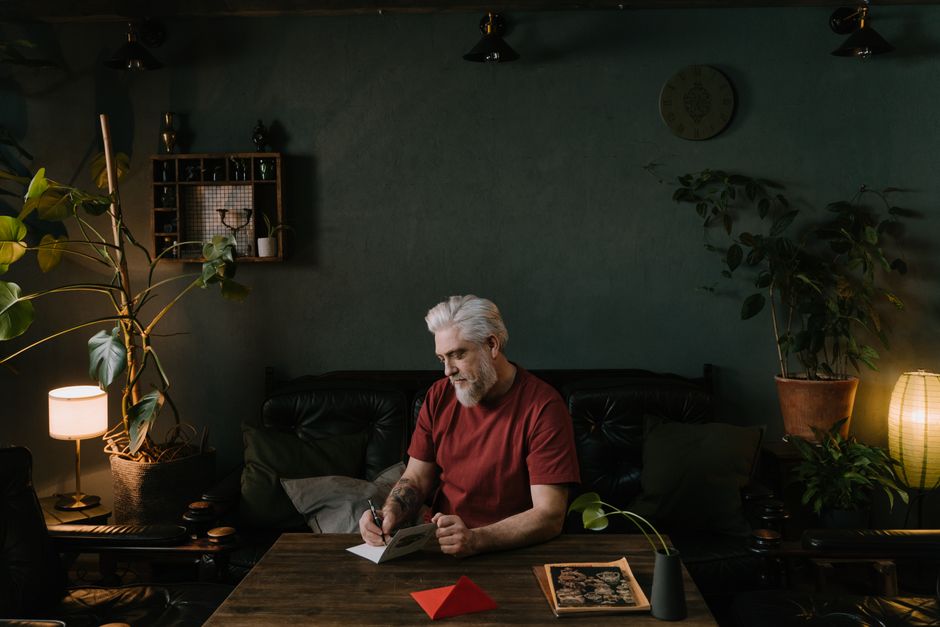
A pause isn't empty time — it's where a message gets checked against what you actually meant. Photo by cottonbro studio via Pexels.
Nugget: The goal was never zero friction. It was friction that serves you instead of working against you.
What's the difference between "sludge" and a helpful pause?
Not all friction is created equal — behavioral economists have a specific word for the bad kind.
Richard Thaler and Cass Sunstein's concept of the "nudge" describes design that steers people toward better choices without removing any options. Its shadow twin is "sludge": friction that works against a person's interest — confusing cancellation flows, buried unsubscribe links, forms designed to exhaust you into giving up (Sludge theory, summarizing Thaler & Sunstein). Sludge is friction with no purpose except making the easy thing harder for someone else's benefit.
But the same research draws a clean line around a different category: friction that is high-effort and helpful. A confirmation prompt before you permanently delete a file. A short delay before an email leaves your outbox. These slow you down at precisely the moment your judgment is most likely to be wrong — and that's the opposite of sludge, even though it looks like friction from the outside. The test isn't "does this take longer?" It's "who does the extra second serve?" Sludge serves the system. A deliberate pause serves you.
This is the distinction worth making explicit in how messaging tools get designed: a "send" button with zero resistance isn't neutral. It's a design choice that assumes your first impulse is always your best one. It usually isn't.
Why do we regret the messages we send in a hurry?
Because the person who hits "send" in the heat of a feeling is not quite the same person who reads it back an hour later.
Behavioral economist George Loewenstein described this as the hot-cold empathy gap: in an emotionally "hot" state — anger, hurt, excitement, longing — people reliably underestimate how much that state is shaping their judgment, and can't accurately predict how they'll feel about the same decision once they've cooled down (Loewenstein, on the hot-cold empathy gap). It's the same mechanism behind grocery shopping hungry or texting an ex at midnight. The feeling in the moment doesn't just influence the message — it briefly is the entire frame the message gets written in.
This pairs with a broader idea from Daniel Kahneman's dual-process psychology: two different systems handle our thinking, one fast and automatic, the other slow and effortful (Dual-process theory, System 1 and System 2 thinking). The fast system is the one composing a reply in real time, reacting to whatever just landed in your chest. The slow system is the one that would catch the line you don't actually mean — but it only gets a turn if something forces the moment to last long enough for it to show up. A pause isn't a delay tactic. It's the on-ramp for the part of your thinking that actually double-checks.
Put those two ideas together and the design implication is direct: a message composed and sent in a single unbroken motion never gives your slower, more accurate judgment a chance to weigh in. The hot state writes it, and the hot state ships it.
| Reflexive sending | Intentional sending | |
|---|---|---|
| Governed by | Whatever system fired first (fast, automatic) | A second pass from your slower, more deliberate judgment |
| Best suited to | Logistics, quick confirmations, low-stakes replies | Anything emotionally loaded, high-stakes, or meant to last |
| What it protects | Speed | The gap between what you felt and what you meant |
| Failure mode | Says the hot-state version and can't take it back | None — that's the point of building the gap in |
What does intentional friction look like in message design, in practice?
It's smaller and more familiar than it sounds. Most people have already met a version of it.
A short delay window before an email actually leaves the outbox — the kind built into most modern email clients — exists for exactly one reason: to give the cooled-down version of you a last look before the hot-state version of you commits. A scheduled-send option does something similar in a different direction: it separates the moment you compose a message from the moment it arrives, so you're not improvising both the words and the timing under the same pressure. Even a simple preview step — seeing the finished card exactly as the recipient will, rather than assuming it from a form field — creates a beat where a mismatch between intention and execution has a chance to surface before it's irreversible.
None of these features make the tool slower in any way that matters. They make it slower in the one way that does: the half-second where you can still change your mind.
This connects to something we've written about before in the context of asynchronous communication and thoughtful design — that removing the pressure to respond instantly tends to produce more considered communication, because people naturally add context and revise once the reflex to answer immediately is taken off the table. Intentional friction is the more deliberate cousin of that same idea. Asynchronous design creates room for a better message by not rushing you. A built-in pause creates that room on purpose, even when everything else about the moment is urging you to be fast.
The distinction that matters here isn't friction versus no friction. It's designed-in pause versus incidental delay. A slow-loading page that makes you wait for no reason is still sludge. A pause placed exactly where judgment is weakest is something else entirely — restraint, built into the architecture instead of left to willpower.
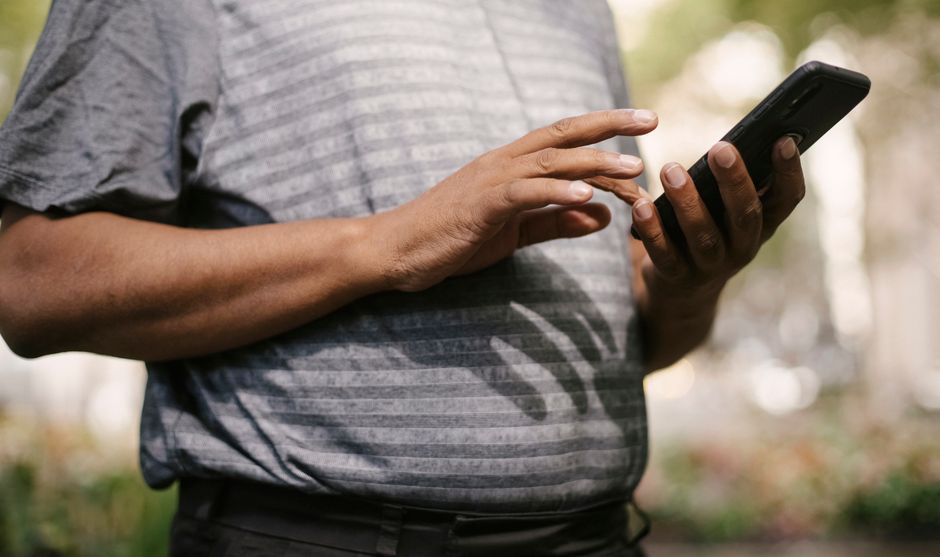
The half-second before you commit is where the hot-state version of a message gets a chance to be checked. Photo by Tim Samuel via Pexels.
Nugget: A pause that's placed on purpose isn't the opposite of good design. It's a more advanced form of it.
How can you build a pause into your own habits, tools aside?
You don't need a feature to borrow the principle. A few small practices do the same job:
- Write it, then leave it. Draft the message, then step away for even a few minutes before sending — long enough for the hot state to loosen its grip on the wording.
- Separate composing from sending. If your message is emotionally loaded, write it in one sitting and schedule or send it in a second. Don't let the same impulse do both jobs.
- Preview before you commit. Look at the finished thing as the recipient will see it, not as you imagined it while typing. Mismatches tend to surface only at that step.
- Ask what your slower judgment would say. If you can't wait, ask yourself directly: is this the version I'd still send tomorrow? If you're not sure, that uncertainty is information.
- Reserve the fast lane for the low-stakes stuff. Save instant, frictionless sending for logistics and quick confirmations — the messages where speed was never the risk to begin with.
Frequently asked questions
Isn't all friction bad for user experience? Not the kind that's placed deliberately at the point where judgment is most likely to be wrong. Behavioral economists distinguish "sludge" — friction that serves the system at your expense — from helpful, deliberation-promoting friction that serves you. The difference is purpose, not duration.
Why do we regret messages sent in an emotional state more than others? The hot-cold empathy gap describes how people in an emotionally charged state can't accurately predict how they'll feel once that state fades, so decisions made "hot" often don't hold up once you've cooled down. A pause gives the cooler, more accurate version of your judgment a chance to catch up before the message is irreversible.
Does a pause slow down every message, even simple ones? No — and it shouldn't. Intentional friction belongs where the stakes or emotional charge are highest, not on every interaction. Logistics and quick confirmations are exactly the low-friction cases that don't need a built-in pause.
How is this different from just being told to "think before you send"? "Think before you send" asks willpower to do the whole job in the moment it's weakest. Designing a pause into the tool itself — a delay window, a scheduled option, a preview step — doesn't rely on willpower at all. It builds the gap in structurally, so it's there whether or not you remember to ask for it.
The last word
We've argued elsewhere that the best personalization technology gets out of the way — that it should remove whatever stands between what you mean and what actually reaches the other person. That's still the right general instinct. But "remove the friction" was never the whole design principle; it was shorthand for "remove the friction that doesn't serve you." The pause before sending fails that test in exactly the opposite direction from sludge: it's friction that does serve you, at precisely the moment your judgment needs the extra second most.
The best messaging tools don't just make things fast. They know exactly where fast stops being the point.