Nostalgia Connects Before It Remembers — Why Shared Past Works as a Gift
Nostalgia isn't solo wallowing — peer-reviewed work shows it boosts social connectedness first, then self-continuity and well-being. A card anchored in a shared past is relationship repair, not just a pretty memory.

Nostalgia Connects Before It Remembers — Why Shared Past Works as a Gift
Nostalgia gets dismissed as backward-looking — a soft filter on old photos. But research in the European Journal of Social Psychology (Van Tilburg, Sedikides, Wildschut & Vingerhoets) finds a sharper sequence: nostalgia increases social connectedness first, and that connectedness is what restores self-continuity — the felt thread between who you were then and who you are now.
A card that says remember when isn't mainly archiving. It's saying we still share a story. The gift is relational before it's historical.
Why is shared nostalgia land different from generic sentiment?
We've written about digital heirlooms and the reminiscence bump — inheritance and life-stage timing. This piece is narrower: nostalgia as a social bridge between two people right now.
| Nostalgia move | What it signals | What it risks |
|---|---|---|
| Shared reference (that diner, that song) | "We still occupy the same past" | Works only if the memory is mutual |
| Solo reference (look what I found) | "I'm thinking of you" | Can feel one-sided or performative |
| Generic vintage aesthetic | "Mood: nostalgic" | Fails the anyone test — no shared plot |
| Specific callback + present tie-in | "That was us; this is still us" | Highest connectedness payoff |
The peer-reviewed pathway suggests the third row fails because it never activates social nostalgia — the kind that requires a co-author in memory.
Nugget: Nostalgia in a card isn't "I miss the old days." It's "We still belong to the same story — and I can prove you remember it too."
How do you design for connectedness, not just mood?
Name the shared scene, not the era. The bus stop in the rain beats 90s vibes because only two people know which bus stop.
Attach the past to the present. You still hate mornings; I still owe you that apology links then and now. Self-continuity is literally the sense that past-you and present-you connect — a card can mirror that for the relationship.
Use imagery that triggers mutual recognition. A photo from a specific shared memory outperforms stock sepia. Visual imagery engages emotion through autobiographical memory pathways more strongly than abstract language alone — but only when the image is meaningfully yours, not a prop.
Leave room for reply. Nostalgia that ends in a closed loop ("those were the days, full stop") closes connection. A question — do you still have that terrible hat? — invites the other person back into the story.
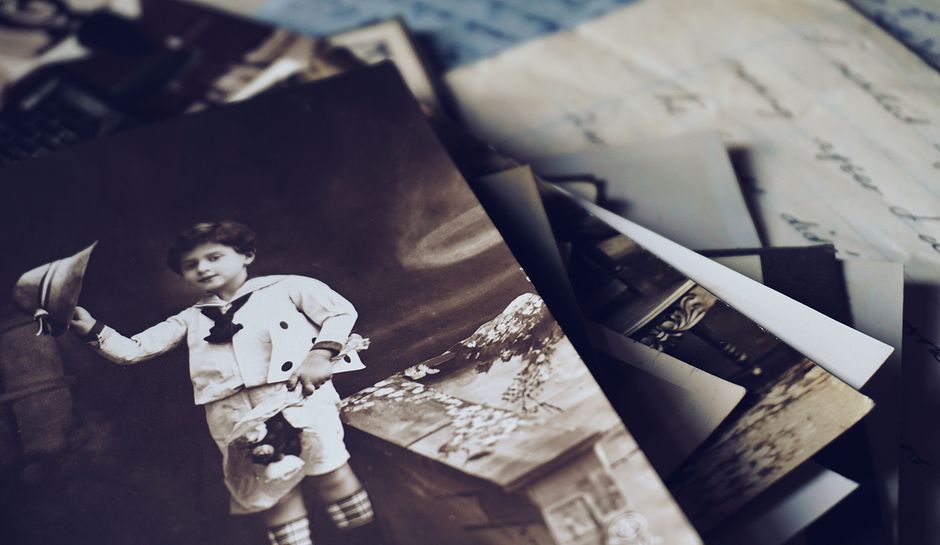
Photo by Suzy Hazelwood via Pexels.
When nostalgia misfires
Not every past reference heals. Memories tied to loss, conflict, or one-sided obsession can shrink connectedness instead of expanding it. The research describes nostalgia's average social function — senders still owe judgment.
Also: nostalgia is not a substitute for present responsiveness. A card full of old jokes after months of silence can read as avoidance. Best paired with a line that meets today — travel, worry, ordinary Tuesday — so the past supports the present instead of replacing it.
Photo by ph.galtri via Pexels.
Nugget: The best nostalgic send fails the stranger test twice: a stranger wouldn't know the reference, and wouldn't be invited to answer back.
FAQ
Isn't this just "personalization"? Personalization can be surface-level (a name in a field). Social nostalgia requires mutual plot — a memory both people own.
What if we don't have photos? Language can carry shared scene specificity; imagery helps when it's recognizably theirs.
Does every relationship need nostalgia cards? No — but when reconnection or distance is the subtext, shared past is often the shortest bridge back to us.