What Actually Makes a Memory Worth Passing Down?
A shoebox of photographs gets handed down for generations. A phone with forty thousand images in its camera roll usually doesn't survive its owner by more than a password reset. The difference isn't the pictures — it's what makes something inheritable at all.

What Actually Makes a Memory Worth Passing Down?
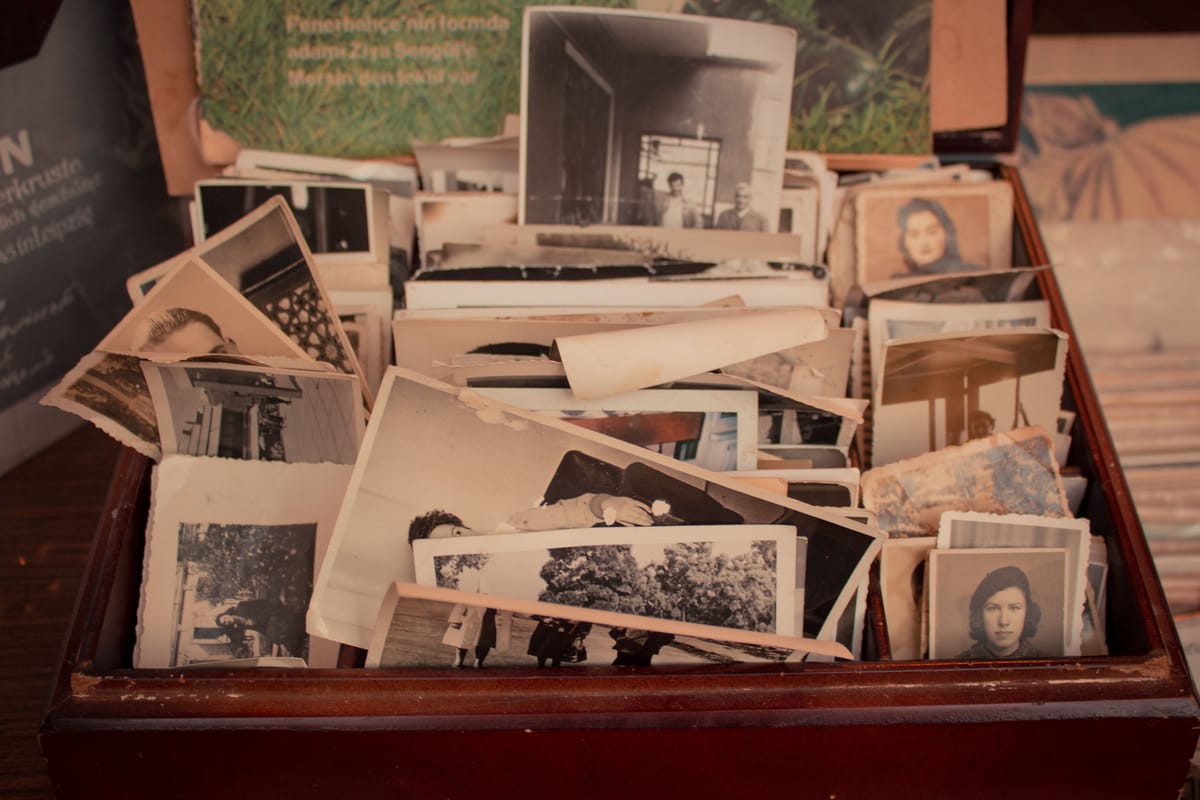
Somewhere in most families, there's a shoebox, a tin, or a drawer that everyone knows about. It holds a stack of photographs gone soft at the corners, a few letters, maybe a ticket stub or a pressed flower. Nobody assigned it the job of being the family archive. It just became one, slowly, because it was small enough to keep and specific enough to matter.
Now compare that to the actual largest archive of memory most people will ever produce: a phone's camera roll. Tens of thousands of images. Every birthday, every meal, every screenshot of a group chat. It is, by volume, a far more complete record of a life than any shoebox could hold. And yet very few people expect it to be handed down to anyone. When someone dies, their photo box gets passed to a daughter or a nephew. Their iCloud account gets a support ticket.
That gap is worth taking seriously, because it isn't really about photographs. It's about what makes something inheritable in the first place — and what we're quietly losing by producing more memory than we've ever produced while passing down less of it.
What makes a physical object feel like a heirloom, exactly?
A shoebox of photos has a few properties that a camera roll doesn't, and none of them are about image quality.
It's finite — someone had to choose what went in, which means someone already did the curating a future reader benefits from. It's singular — there's one physical box, not a synced copy on five devices, so handing it over is a real event with a real moment attached to it. And it carries evidence of handling — worn corners, a rubber band gone brittle, handwriting on the back of a print — which is itself information about how much the object was touched and valued over time.
Researchers who study exactly this question have found that these aren't incidental features. In one of the more direct investigations of the problem, HCI researchers Odom, Banks, Kirk, and colleagues built three prototype devices explicitly designed to explore what a "digital heirloom" might look like, then studied how eight families actually used them at home. Their conclusion was that families wanted to treat digital archives with the same intentionality, permanence, and ritual of passing-down that physical heirlooms already have — and that current technology, built for storage and search rather than inheritance, doesn't really support that. A folder of files can be copied infinitely and updated instantly. Those are useful properties for a backup. They are close to the opposite of what makes something feel like it was kept.
Nugget: A heirloom isn't defined by how old it is or what it's worth — it's defined by the fact that someone, at some point, decided it was worth keeping on purpose. Volume is not the same thing as meaning.
Why do we feel the pull to preserve the past in the first place?
It's tempting to treat this as a purely practical, storage-and-formats problem. It isn't — underneath it is a fairly specific psychological need, and one that's been studied more rigorously than its slightly sentimental reputation might suggest.
Nostalgia — the act of dwelling, warmly, on a past moment — used to be dismissed by psychologists as a kind of homesickness or minor melancholy. More recent research has largely reversed that view. Across a series of experiments, psychologists Van Tilburg, Sedikides, Wildschut, and Vingerhoets found that nostalgia works by increasing a person's sense of social connectedness — feeling accepted and bonded to others — which in turn increases "self-continuity," the felt thread connecting who you were to who you are now. That sense of continuity isn't just pleasant; the same research program has linked it to greater subjective vitality — a real, measurable feeling of aliveness and energy, not just a wistful mood.
Put plainly: revisiting the past through a specific, tangible trigger — a photo, a letter, an object — isn't indulgent. It's one of the more efficient tools the mind has for reminding a person that their life is a continuous thing, rather than a series of disconnected days. That's true whether the trigger belongs to your own past or to a memory someone handed down to you from theirs.
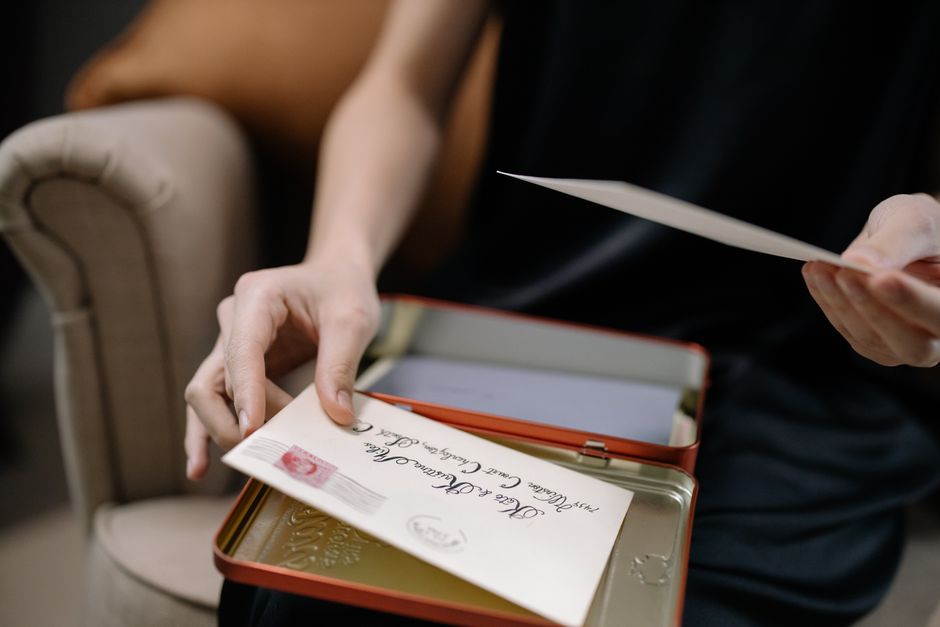
The object matters less than the fact that someone chose to keep it. Photo by cottonbro studio via Pexels.
What happens to memories that don't have an heir?
This is where the digital side of the story turns from an inconvenience into something closer to a genuine loss. HCI researchers Massimi and Charise coined the term "thanatosensitivity" to describe design that takes death and inheritance seriously as a real use case, rather than an edge case to route around. Their argument, since built on by a wave of follow-up research, is that digital archives left behind after death — photos, messages, whole accounts — need deliberate design support for bequeathing, collaborative acts of remembrance, and reflection, not just indefinite storage. Most consumer technology still doesn't offer that. It offers a login screen, a two-factor prompt tied to a phone that no longer has an owner, and a support process built for account recovery, not memory transfer.
The result is a strange asymmetry. We are, collectively, generating more photographs, more recorded conversations, more small daily documentation of our lives than any generation before us. And a meaningful share of it will never be opened again by anyone but the person who made it — not because it wasn't worth keeping, but because nothing about how it's stored asks anyone to curate, name, or intentionally pass it on.
| Physical heirloom (shoebox, letters) | Typical digital archive (camera roll, cloud backup) | An intentional digital heirloom | |
|---|---|---|---|
| Volume | Small, self-limiting | Effectively unlimited | Deliberately curated |
| Selection | Chosen by hand, over time | Rarely reviewed after capture | Chosen with a specific recipient in mind |
| Access after death | Physically found and opened | Locked behind credentials, 2FA, support tickets | Shared or designated while the sender is still living |
| What it communicates | "I kept this because it mattered" | "This existed and was captured" | "I kept this, and I want you to have it" |
How do you actually turn a digital archive into something inheritable?
None of this requires abandoning digital photos and messages for shoeboxes again — that ship has sailed, and there's nothing wrong with the ship. It requires borrowing the behavior that made physical heirlooms meaningful, and applying it on purpose to what already exists digitally.
A few things that seem to matter, based on the research above and on how families actually describe using the prototype heirloom devices:
- Curate instead of accumulate. The forty thousand photos on a phone aren't a heirloom; the eleven a person deliberately pulls out, names, and gives context to are. Curation is the labor that used to happen automatically when space was scarce — it now has to happen on purpose.
- Attach the story to the artifact. A caption, a voice note, a line about why a photo was taken turns a file into an object with provenance — the digital equivalent of handwriting on the back of a print.
- Make the handoff a moment, not a setting. Sharing a memory now, deliberately, to a specific person — rather than leaving an entire archive to be discovered later — recreates the sense of ritual that a physical handoff always had built in.
- Choose formats and platforms built to last, not just to store. This matters, but it's a genuinely separate, more technical question — worth its own discussion — from the emotional and curatorial work above.
Nugget: Digital storage solved the problem of losing memories to time. It hasn't yet solved the older problem — the one shoeboxes solved by accident — of turning a pile of memories into something someone else can actually receive.
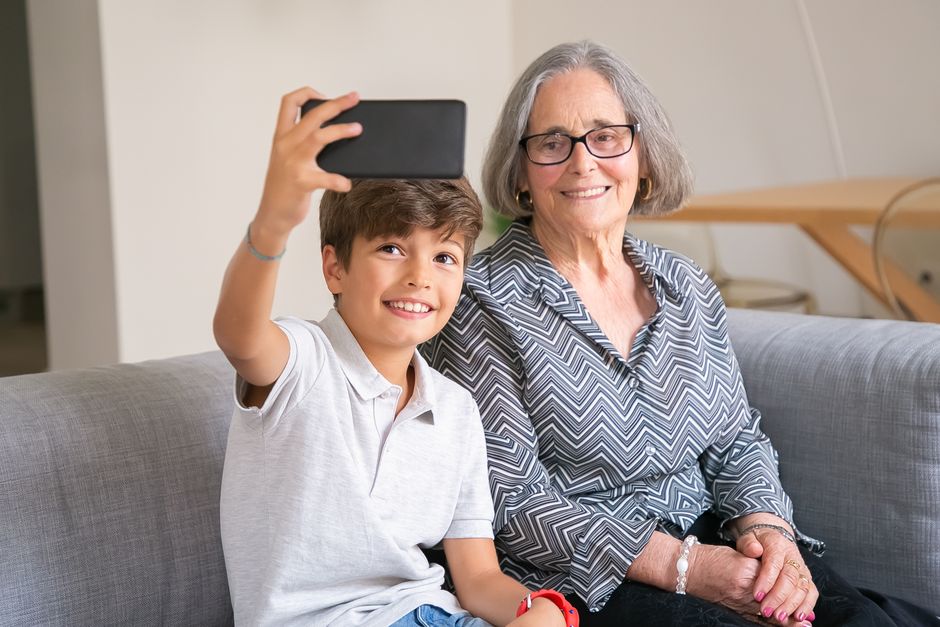
The moment of capture isn't the same as the moment of being given. Photo by Kampus Production via Pexels.
FAQ
Is nostalgia actually good for people, or is it just a pleasant distraction? Research points toward it being functionally useful, not just pleasant. Studies on nostalgia's mechanism have found it increases social connectedness and self-continuity, both of which are linked to measurable well-being outcomes rather than just a passing warm feeling.
Why don't cloud photo backups already solve the "digital heirloom" problem? Because backup and inheritance are different jobs. A backup is optimized to never lose a file. An heirloom is optimized to be found, understood, and felt by someone specific — which requires curation, context, and an intentional handoff that automatic backup was never designed to provide.
Do I need to wait until "someday" to pass down a digital memory? No — and the research suggests the opposite is better. Sharing a specific, chosen memory with someone now creates the same self-continuity and connectedness benefits for both the sender and the recipient, rather than leaving an entire undifferentiated archive to be sorted through later, usually under much harder circumstances.
What's the single easiest place to start? Pick one photo or message that actually means something, and give it to someone — with a sentence about why. That single act does more of the work of "heirloom-making" than any backup setting ever will.
An open question, not a tidy ending
There's no clean fix here, and maybe there shouldn't be one yet — this is still a fairly new problem, historically speaking. Families have had centuries to develop unspoken rules about what gets kept and who gets it. We've had, generously, about twenty years of producing memory at this volume and speed, and the customs haven't caught up.
So instead of a conclusion, a genuine question worth sitting with: of everything currently sitting in your camera roll, your messages, your notes app — what would you actually want someone to be handed, on purpose, someday? Not everything. Just the part that was worth keeping.
Sources: Odom, Banks, Kirk et al. — "Technology Heirlooms?", CHI 2012 (ACM) · Van Tilburg, Sedikides, Wildschut & Vingerhoets — European Journal of Social Psychology · Massimi & Charise — "Dying, Death, and Mortality: Towards Thanatosensitivity in HCI" (Microsoft Research)