What Happens to a Digital Card in Ten Years? Format Longevity and the Keepability Problem
Storage isn't preservation. The formats a digital greeting travels in — image codecs, video containers, platform lock-in — determine whether a message someone cared about today can still be opened a decade from now.
What Happens to a Digital Card in Ten Years? Format Longevity and the Keepability Problem
We explored earlier what makes a digital memory inheritable — curation, ritual, the deliberate handoff that turns a camera roll into something a family would actually keep (What Actually Makes a Memory Worth Passing Down?). This piece picks up a different thread from that same problem: even when someone wants to keep a digital greeting, will the file still open?
Physical cards yellow. Digital ones obsolesce. The failure modes look different, but the emotional stakes are identical — a message that can't be retrieved isn't a keepsake, it's a broken link with someone's handwriting locked inside.
Why is "saved" not the same as "preserved"?
Most consumer technology optimizes for access now, not access in 2036. A card delivered through a proprietary viewer, wrapped in a platform-specific animation format, hosted on a URL that requires an active account — each of those layers is a bet that the platform, the codec, and the business model will still exist when someone tries to reopen the message.
Preservation professionals draw a hard line between bit-level storage (the bytes are still on a disk somewhere) and functional preservation (a human can still experience the content as intended). The Library of Congress's digital preservation program maintains detailed format registries precisely because "we have the file" doesn't mean "we can render it." Over 440 digital formats are catalogued with sustainability factors — disclosure, adoption, transparency, external dependencies — because obsolescence is predictable enough to plan for, yet invisible enough that most senders never think about it.
Nugget: A shoebox of photographs survives because the format (light on paper) outlasted the technology that made it. Digital keepsakes inherit the opposite problem — the emotional content may be permanent; the container almost never is.

Photo by fish socks via Pexels.
What actually kills digital greetings over time?
Four failure modes show up again and again in preservation literature and consumer experience:
1. Platform shutdown
If the card only exists inside a vendor's app — not as an exportable artifact the recipient owns — the message's lifespan equals the company's lifespan. HCI research on digital heirlooms (Odom et al., CHI 2012) found families wanted digital archives treated with the same permanence as physical ones, but consumer platforms rarely offer that contract. When a service sunsets, "your cards" often go with it.
2. Codec and container obsolescence
Video greetings are especially vulnerable. A card encoded in a once-ubiquitous container may not play in tomorrow's default browser without transcoding. Industry preservation guidance consistently favors widely adopted, well-documented formats — the Recommended Formats Statement ranks still images and moving images by sustainability factors, preferring open, transparent specifications over proprietary wrappers with external dependencies.
This is why generic industry discussion distinguishes adaptive streaming delivery (designed for reliable playback now across devices) from archival preservation (designed for playback later without a live service). A greeting card platform that conflates the two is optimizing for opening day, not anniversary number ten.
3. Link rot and authentication drift
A card delivered as "click this URL" depends on DNS, TLS certificates, login sessions, and CDN policies staying compatible. Links break. Accounts lapse. Password resets lock people out of their own inbox archives. The message wasn't deleted — it became unreachable.
4. Metadata loss
Even when pixels survive, context may not: who sent it, when, why that image was chosen. Preservation metadata standards like PREMIS exist because archivists learned that files without provenance decay into anonymous data. A greeting stripped of sender context is emotionally half-erased.
How do preservation principles translate to something a sender can use?
The Library of Congress doesn't publish greeting-card guidelines — but its format-evaluation framework is readable by anyone trying to judge keepability:
| Sustainability factor | Plain-language question for senders |
|---|---|
| Disclosure | Is the format documented openly, or locked behind one vendor? |
| Adoption | Will common devices still render this in a decade? |
| External dependencies | Does opening the card require a live service, account, or plugin? |
| Technical protection (DRM) | Can the recipient export and keep a copy they control? |
A digital card that passes those questions isn't guaranteed forever — nothing is — but it's playing a different game than a message trapped in a walled garden.
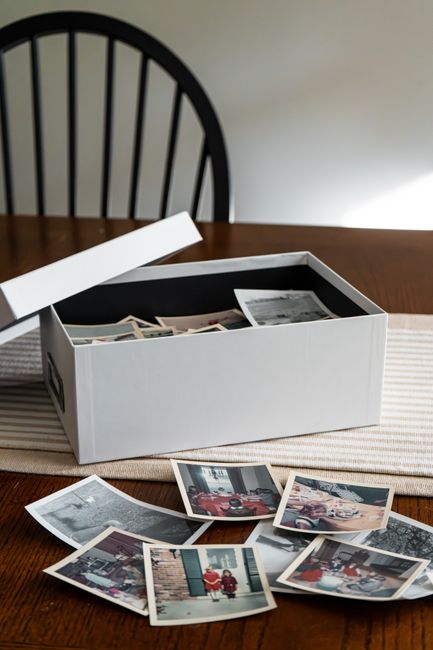
Photo by RDNE Stock project via Pexels.
Static, animated, and video — different longevity profiles
Still images in open formats (JPEG, PNG, WebP with wide decoder support) age relatively gracefully — boring is an asset in preservation. Animated cards add timeline data, layer compositing, and font dependencies; each layer is another obsolescence surface. Video cards carry the heaviest container/codec risk unless the platform also offers a fallback still or transcript the recipient can keep independently.
None of this means video or animation is wrong for emotional impact — we've argued the opposite for motion's expressive power. It means longevity should be a conscious design dimension: what does the recipient own after the experience ends?
What would "keepable by default" look like?
Research on digital heirlooms suggests families want three things current messaging products rarely bundle together:
- Recipient-side ownership — a copy that doesn't require the sender's platform to stay online
- Ritualized handoff — not accidental discovery in a backup, but intentional "this is yours to keep"
- Format humility — preferring widely supported exports over flashy proprietary effects that won't migrate
For greeting-card platforms, that translates into product choices visible to senders even if they never read a preservation white paper: downloadable keepsake versions, open image formats for hero art, text that survives separately from animation, and URLs that degrade to static fallbacks rather than hard 404s.

Photo by Tima Miroshnichenko via Pexels.
Does anyone actually reopen old digital cards?
Honest answer: we have better data on intent than on decade-long behavior. Families in the CHI heirloom study wanted permanence; industry growth in personalized, non-occasion-driven messaging suggests senders increasingly treat digital cards as relationship artifacts, not disposable notifications. Whether they'll successfully keep them depends less on sentiment than on format choices made at send time.
The parallel to physical cards is instructive: people do keep paper greetings for decades when the object feels singular. Digital messages earn the same status when they're singular and retrievable — when "I kept this" is literally true, not "I remember getting something."
FAQ
Should senders avoid video cards for longevity? Not necessarily. Prefer platforms that give recipients a durable fallback — still image, PDF, or export — alongside the rich version.
Are open formats always better? For keepability, generally yes. For opening-day delight, proprietary effects can win. The tradeoff is temporal: now vs. later.
Is cloud backup enough? Backup preserves bits. Preservation preserves meaning and renderability. Both matter; neither alone is sufficient.
How does this connect to the earlier heirlooms piece? That article asked what makes a memory worth passing down. This one asks whether the container will survive the passing. Curation without format longevity is intention without infrastructure.
The emotional case for sending something lovely hasn't changed. The technical case for making it last is just catching up.