The Line That Costs You Something: Why a Little Vulnerability Makes a Card Feel Intimate
Safe messages are easy to send and easy to forget. Psychology on self-disclosure suggests intimacy grows when a digital note risks a little — privately, to one person, with a line that couldn't belong to anyone else.

The Line That Costs You Something: Why a Little Vulnerability Makes a Card Feel Intimate
You've written the safe version. Thinking of you. Hope you're well. Miss you. It's true enough. It also could have left any phone for any person on any Tuesday.
Then there's the other draft — the one you almost delete. I still replay that conversation in the car. I'm proud of you in a way I don't say out loud enough. I was lonely this week and you crossed my mind.
That second line costs something. Not drama — disclosure. And for one-to-one digital cards, that cost is often the difference between a message that lands as care and one that lands as courtesy.
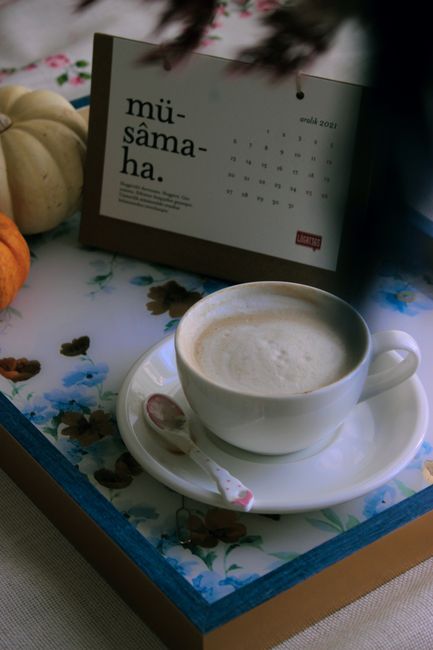
Intimacy rarely needs a crowd. It needs a risk taken for one person. Photo by cottonbro studio via Pexels.
Nugget: A card feels intimate when the sender could have stayed safer — and chose not to.
What does self-disclosure actually do in relationships?
Self-disclosure is the simple act of sharing something personal that wasn't already obvious. Classic interpersonal research treats it as a building block of liking and trust: we tend to like people who disclose to us, and we like people we disclose to. In adolescence and adulthood alike, disclosure is linked to relationship quality and well-being when it happens in contexts that feel reciprocal and safe (systematic review of online/offline disclosure).
That doesn't mean oversharing is a strategy. It means selectivity is the point. The line that works names something real — a feeling, a fear, a specific gratitude — without dumping the whole diary on someone who didn't ask for it.
We've written about specificity as proof of attention and shared-past nostalgia. This piece is adjacent but different: not I remember our diner, not I noticed your hobby — but here is a piece of my inner life I'm willing to show you.
Why can digital sometimes intensify intimacy?
Text-based channels strip away facial expression and tone — which sounds like a loss. Paradoxically, research on computer-mediated communication finds that people often perceive a partner's disclosures as more intimate in text than face-to-face, and then reciprocate with more intimate disclosures of their own — a perception-behavior intensification loop (Jiang, Bazarova & Hancock, Communication Research).
For senders, that has a practical edge. A digital card is already a framed, intentional object — not a thread of half-finished texts. When you put a slightly braver line inside it, the format itself says: I meant this. The recipient isn't decoding a mid-scroll comment. They're opening something made for them.
Private vs public: the audience changes everything
Here's the crucial boundary. A series of PLOS ONE experiments found that deeper self-disclosure was linked to higher intimacy offline — but lower intimacy and satisfaction when the same kind of disclosure felt publicly inclusive online (think timeline-style visibility). When disclosure was reframed as partner-focused rather than self-broadcast, those negative effects faded.
In plain language: vulnerability on a stage can feel like performance. Vulnerability in a room for two feels like trust.
A one-to-one greeting card is structurally closer to the second. It's not a feed. It's a sealed moment — image, line, maybe a question that invites them back. That design is why a riskier sentence can land as intimacy rather than overshare… if you keep the audience to one.
| Disclosure style | Feels like | Typical outcome |
|---|---|---|
| Safe template (Hope you're well) | Courtesy | Low risk, low stickiness |
| Specific but closed (Remember that trip) | Shared memory | Warmth; may not invite reply |
| Private vulnerability (I've been scared about…) | Trust | Higher intimacy when reciprocal |
| Public vulnerability (broadcast post) | Performance | Can reduce dyadic intimacy |
What "a little vulnerability" looks like in practice
You don't need a confession. You need a sentence with skin in the game.
Name the feeling, not the résumé. I was proud of you beats Congrats on the promotion when both are true — the first discloses your inner state.
Admit the awkwardness. I'm bad at saying this out loud is itself a disclosure — and often makes the next line easier to receive.
Offer a soft door. End with something answerable: Does that resonate? or How are you actually doing? Reciprocity is part of how disclosure builds bonds; a closed speech leaves them holding your feelings with nowhere to put their own.
Match the image to the temperature. Soft, quiet art can hold a braver line better than fireworks. Mood-first browsing — the way TheBlueBrook organizes by feeling and imagery — helps you find a frame that won't undercut what you're trying to say.

Unhurried images make room for unhurried words. Photo by cottonbro studio via Pexels.
Nugget: The bravest line in a card is rarely the longest. It's the one that wouldn't survive a stranger reading it.
When vulnerability misfires
Not every hard truth belongs in a card. Conflict that needs a conversation, crises that need presence, or secrets that aren't yours to share — those fail the format. Disclosure research assumes a context of care, not ambush.
Also: vulnerability without responsiveness history can feel like dumping. If you've been distant for months, a sudden emotional dump may read as avoidance of the present. Pair the brave line with something that meets today — a check-in, an apology, an offer.
And remember feeling understood activates reward circuitry when it lands. Your job isn't to be maximally exposed. It's to be legible — clear enough that they can meet you.
Frequently asked questions
Isn't this just oversharing? Oversharing ignores the audience and the ask. Vulnerability in a card is selective, private, and usually invites reply — not a monologue.
What if I'm not a "feelings person"? Start smaller than you think. I don't say this enough: thank you for staying is enough risk for most Tuesdays.
Does digital make vulnerability easier or harder? Both. Text can intensify perceived intimacy and reciprocity (Jiang et al.), but public-style disclosure can backfire (PLOS ONE). Keep it one-to-one.
How do I know I've gone far enough? If a stranger could claim the line, go further. If only they would understand why it costs you something to send it, you're close.
The last word
Safe messages keep the peace. Slightly braver ones build the relationship.
You don't owe anyone your whole inner weather. But if you've been circling the honest sentence — the one that makes your thumb hover over send — consider that the hover is information. The card that costs you a little is often the one they keep.
When you're ready, find an image that matches the temperature and give the line room to breathe. One person. One risk. One Tuesday that might actually stick.